
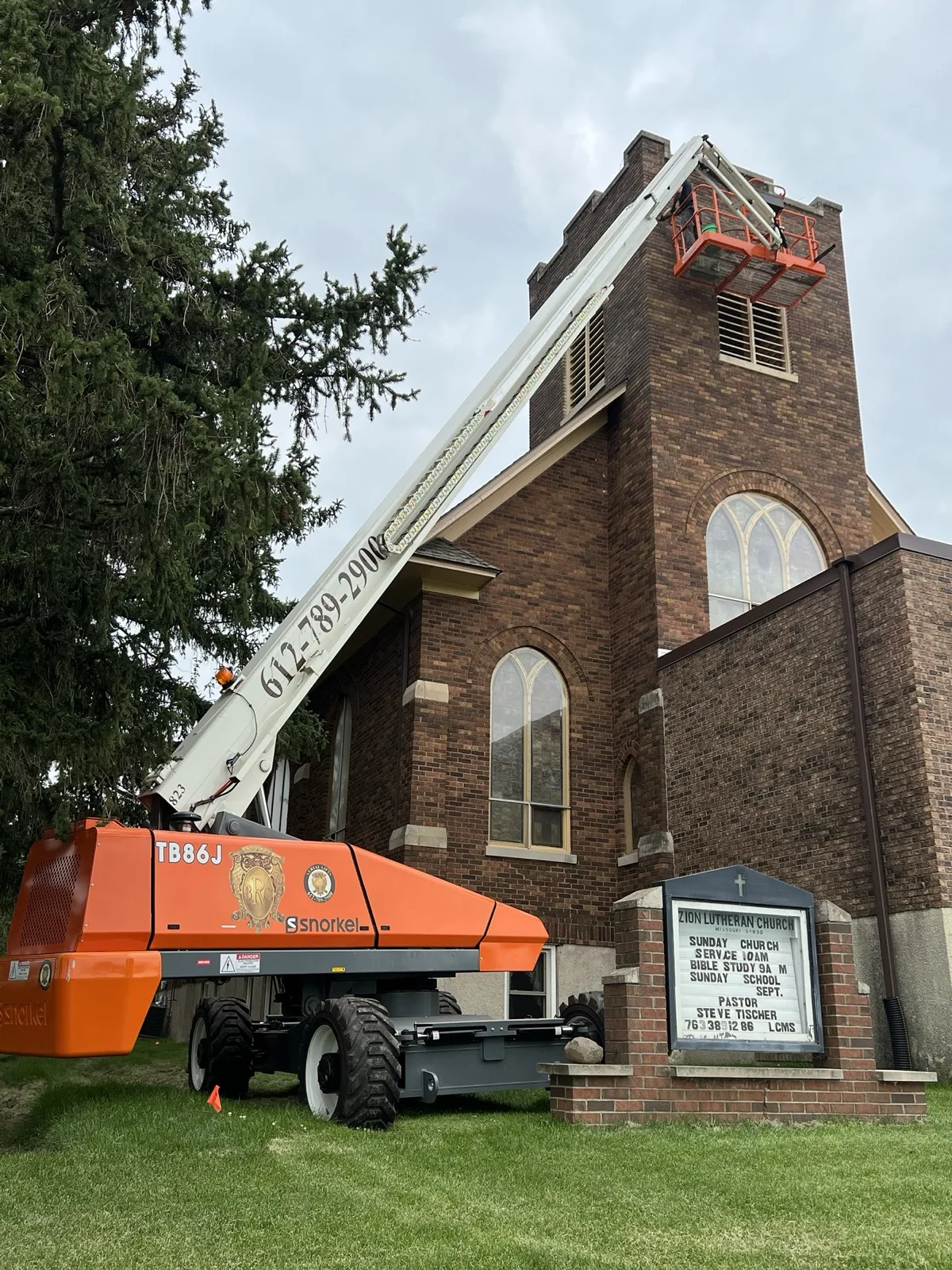
Commercial Restoration
Restoration for factories, apartment buildings, churches, schools and storefronts — wall rebuilds, stone and brick repair, parapets and lintels, run by a crew that works occupied properties.
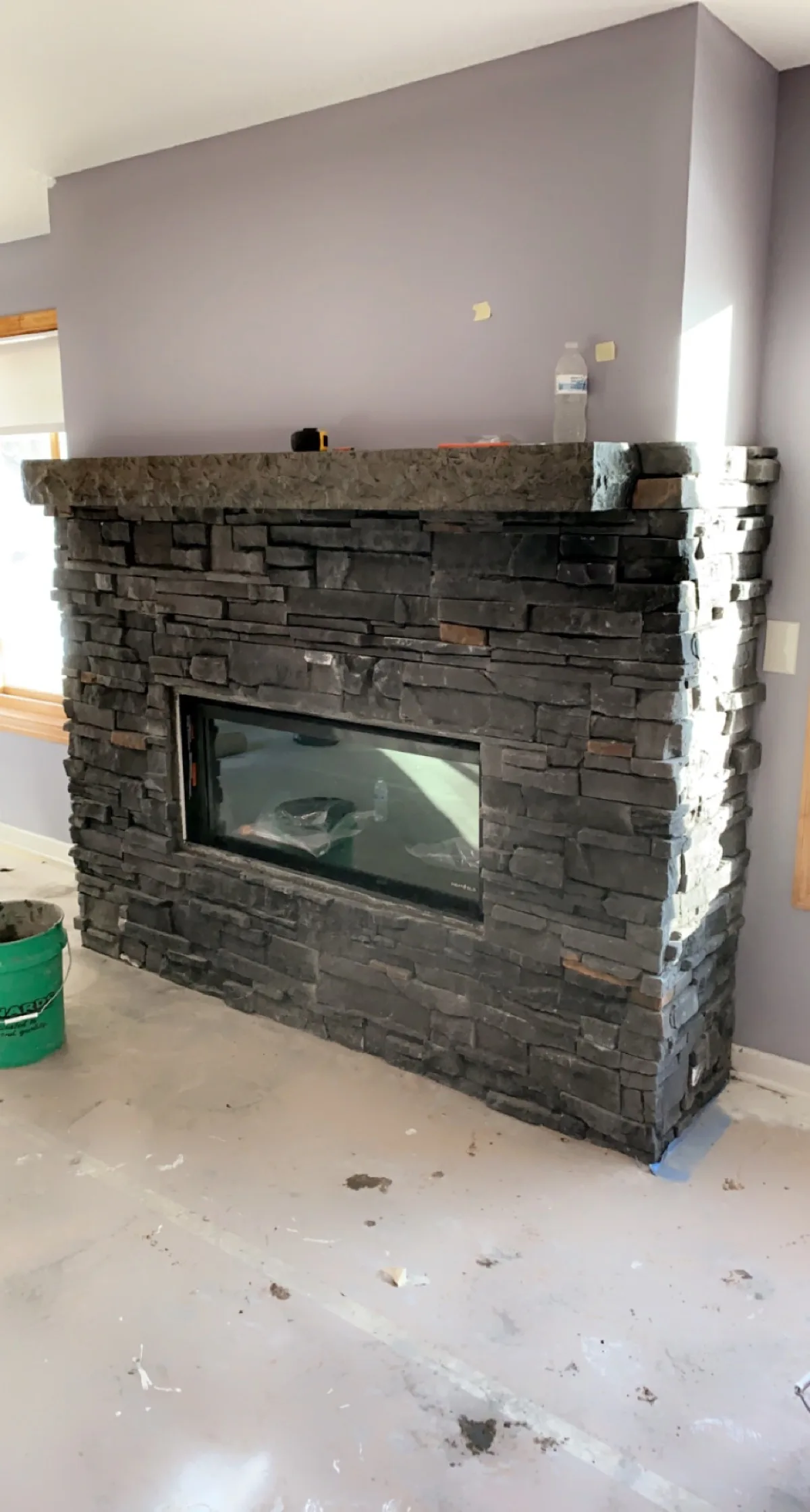
Learn More Stone masonry in Minneapolis runs from a single fireplace wall to a whole building facade. We set natural stone and manufactured stone veneer on houses, foundations, columns and chimney chases. We build stone fireplace surrounds, freestanding walls and flagstone work. Stone masonry also covers repair of limestone, sandstone and granite on older Twin Cities buildings. Stone bands, sills and church walls turn up on the restoration work we do on commercial buildings. Every quote starts with a look at the wall in front of us.
Homeowners call about a fireplace surround or veneer on a dated front. Builders call for a stone sub on new construction. Property managers call when limestone sills shift or the stone face starts flaking off. We come out, look at the wall, and photograph what is failing. Then you get a written scope that names the stone, the mortar and the access. Photos go with it, so you see what we saw. If the stone sits on a chimney that has shifted, the fix is a rebuild. That work lives on our chimney rebuild page.
Tell us about your project and we’ll get right back to you.
Stone veneer comes two ways, and they are built differently. Full bed stone is laid up like a wall and carried on the foundation. Over wood or steel framing, the code caps that veneer at five inches thick. Thin adhered veneer bonds to a mortar bed over lath, so it needs no shelf to sit on. A water resistive barrier goes on the wall before either one. Adhered stone also has to stop short of grade. The code asks four inches of clearance above soil and two inches above paved areas. A flashed screed runs along the bottom.
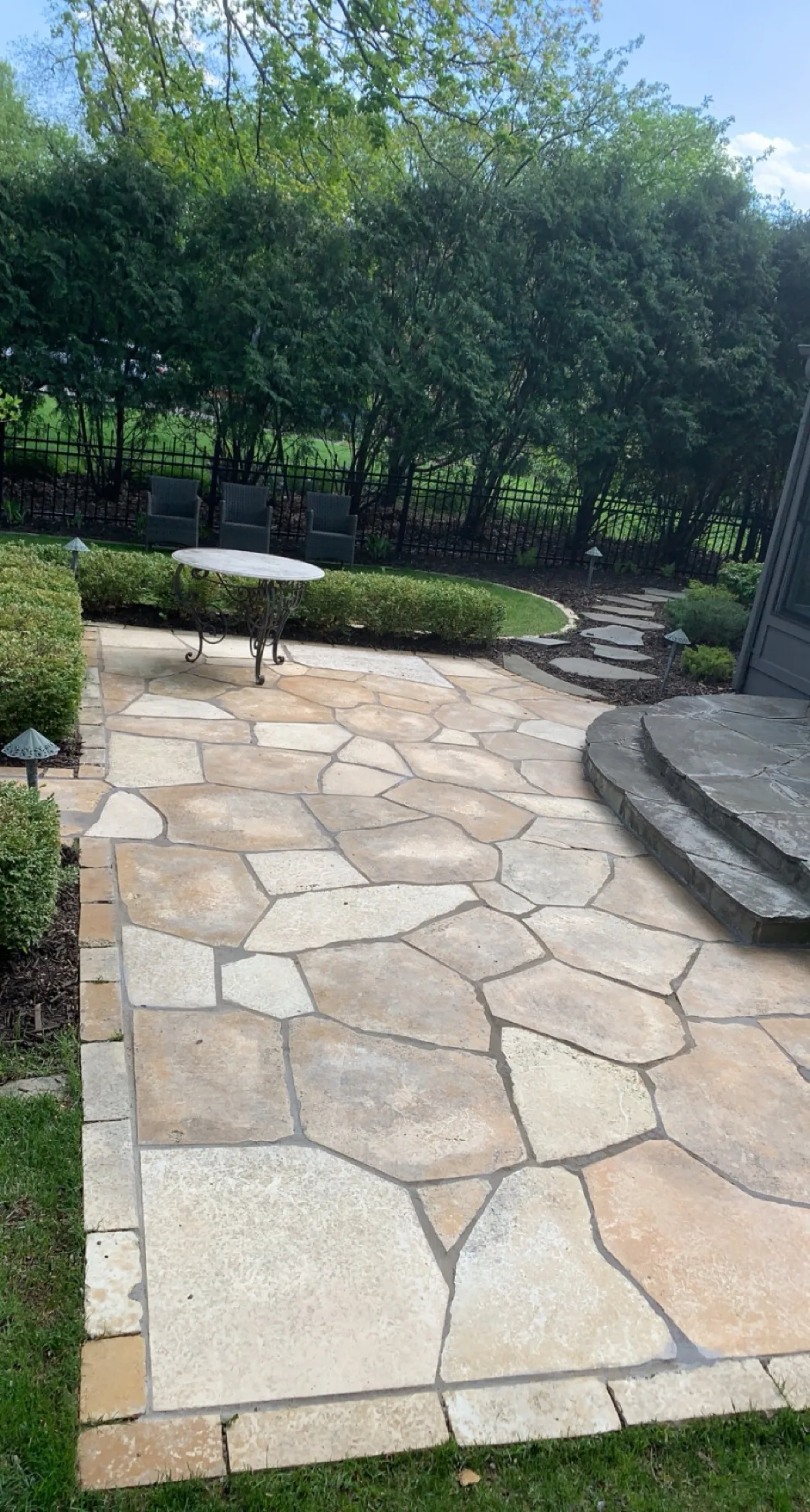
Natural stone is quarried and cut, so no two pieces match. Manufactured veneer is cast from cement, aggregate and pigment in stone shaped molds. Those units are thinner and lighter than full bed stone, so they suit chimney chases, columns and gables. Natural stone carries well on foundations, piers and full facades. Either way, the water details decide how the wall ages. Minnesota puts roughly 80 to 100 freeze and thaw cycles a year through a wall. Flashing, weeps and drainage go in as the stone goes up. Flagstone walks and stone slab steps have their own page.
Minneapolis was built out of the stone under it. A shelf of Platteville limestone caps the soft St. Peter sandstone along the river. Minneapolis quarried it from 1864, often right on the building site. The 1881 Pillsbury A Mill went up in limestone ashlar. The Stone Arch Bridge sets granite piers under limestone arches below St. Anthony Falls. City Hall is rough cut pink granite brought in from Ortonville. That is the stone record older Minneapolis buildings still carry, and the material we match when a piece fails. The older stone stock across the river in St. Paul runs the same way.
Around 88,000 Minneapolis housing units date to 1939 or earlier, and stone shows up on plenty of them. Soft stone fails in a pattern here. Water gets in, salts crystallize inside the face, and the surface spalls or delaminates. A leaking gutter above an open joint speeds it up, so we fix the water source first. Then failed pieces come out and matched stone goes in. Repointing mortar has to be softer and more permeable than the stone itself. Harder mortar pushes the stress into the stone, and the stone cracks. Matching mortar for repointing comes before any grinder touches a joint.
A freestanding stone wall has no building to lean on, so the base decides how long it lasts. We dig past the topsoil, compact a stone base and keep water moving away from it. Water that cannot drain freezes under a wall, and the wall moves. Garden walls, seat walls, columns and boulder accents get the same treatment underneath. Above grade the job is stone selection and joint work, and the cap is what keeps the top dry. A wall that holds back soil is a different build with different loads on it.
Stone sills, bands, caps and lintels are the pieces that fail first on an older building. They sit flat, they take the most water, and they move first. We take them down, reset them in fresh mortar and rebuild the courses under them. On a mixed wall the brick gets handled in the same trip. That work is spalled brick, cracked lintel and porch pier repair. Front steps and stoops are the other place stone works loose, and we rebuild those from the base up.
Free, no-obligation estimates across Minneapolis and the Twin Cities metro.
(320) 465-1161From the first look at the site to the final walk-through, here is exactly how it goes.
We assess the masonry where it lives — what failed, why, and how far it has spread. On commercial buildings that means getting on the wall, not a drive-by.
You get a written price with the must-fix separated from the can-wait, so the budget goes where the wall needs it. Timelines and access logistics are spelled out up front.
Matched materials, full joints, proper crowns, real bases and drainage. Occupied buildings stay open, sites get protected, and cleanup happens every day — not just the last one.
We walk the finished work together — joints, matches, cleanup, the whole scope. Done means you have looked at every part of it and said so.
Common questions about stone masonry across Minneapolis and the Twin Cities metro. Don't see yours? Give us a call — we're happy to help.
Restoration for factories, apartment buildings, churches, schools and storefronts — wall rebuilds, stone and brick repair, parapets and lintels, run by a crew that works occupied properties.
Learn More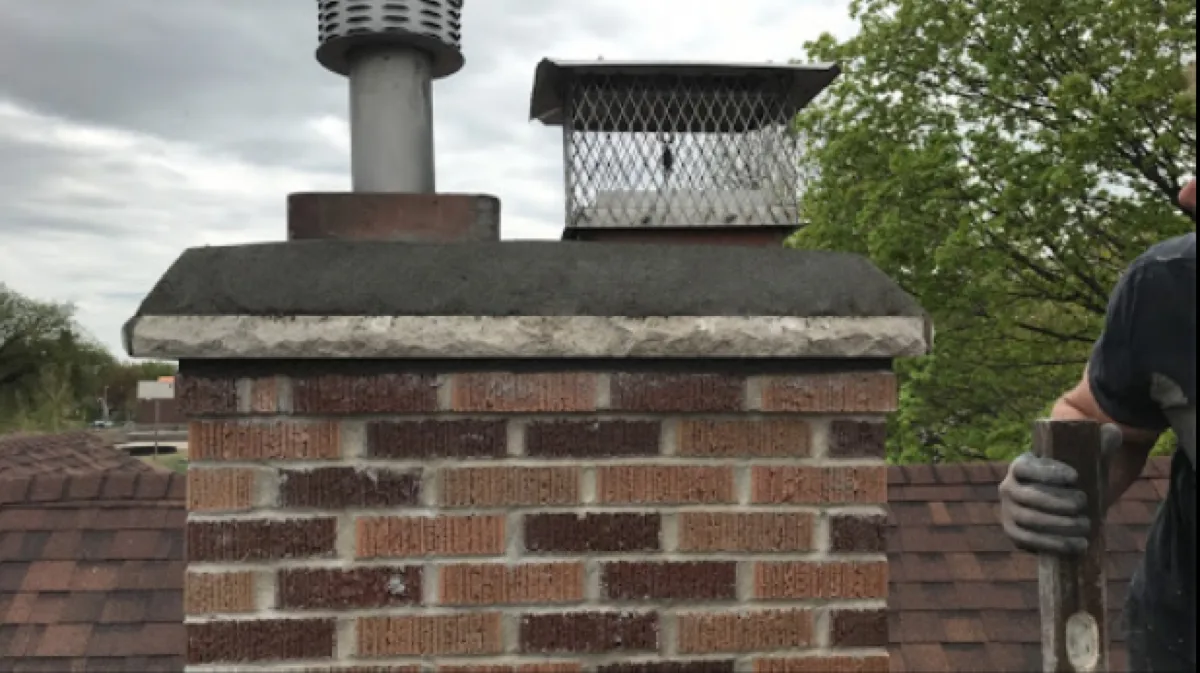
Full and partial chimney rebuilds — deteriorated stacks torn down to sound masonry and rebuilt with new brick, cast crowns and stainless caps.
Learn More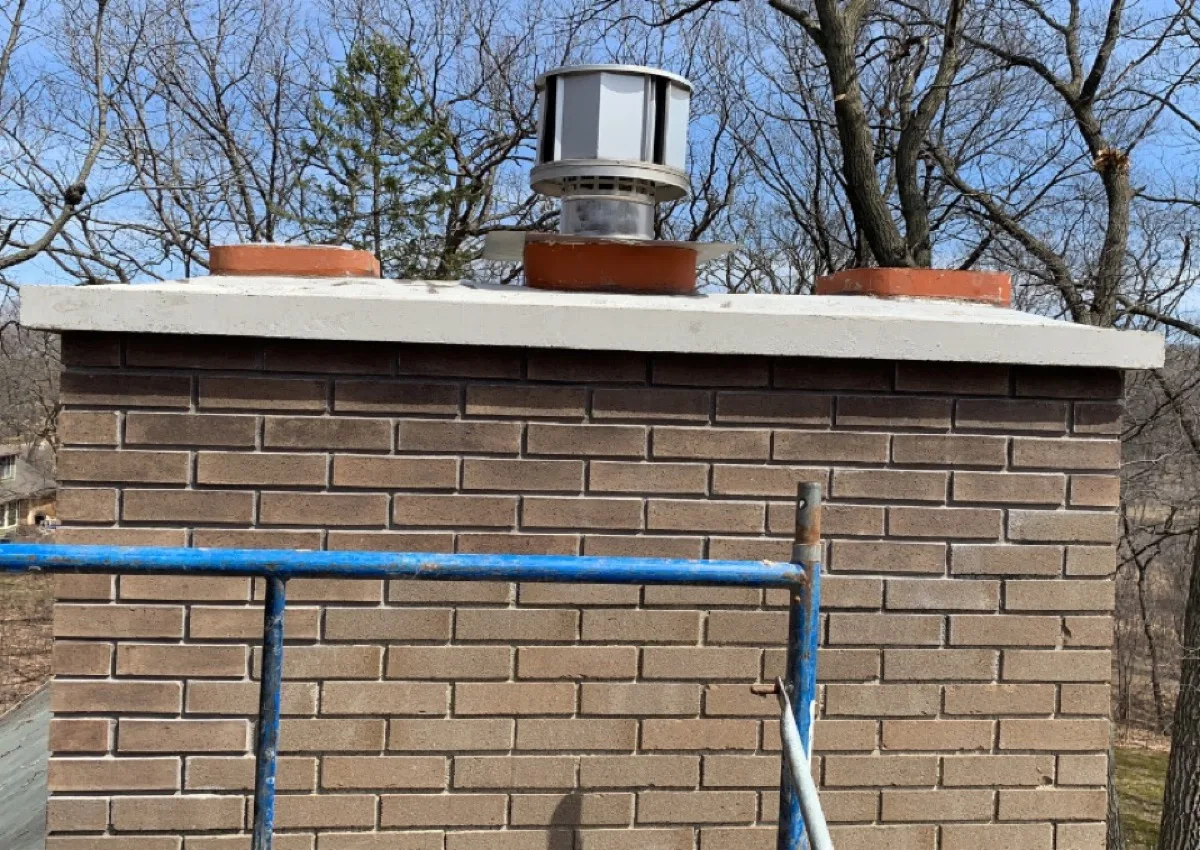
Crown repair, joint repointing, spalled brick replacement, stainless caps and chimney liner systems — the fixes that stop water before it forces a rebuild.
Learn More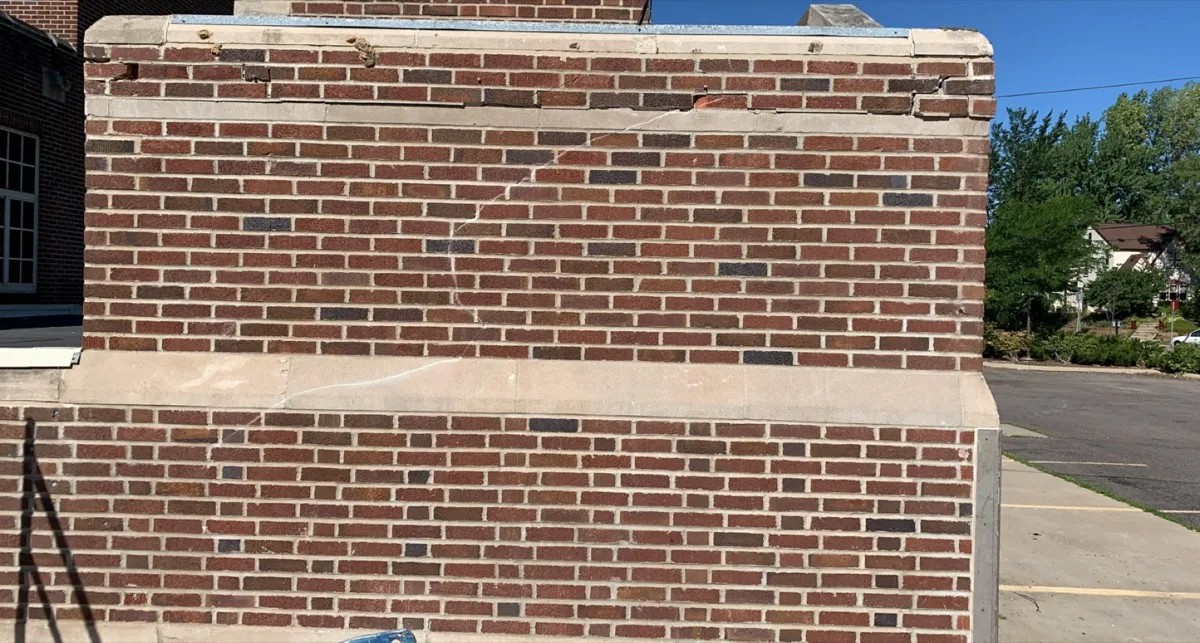
Failed mortar ground out and repointed to match the original — on chimneys, houses, and full commercial elevations. The fix that saves the wall you already have.
Learn More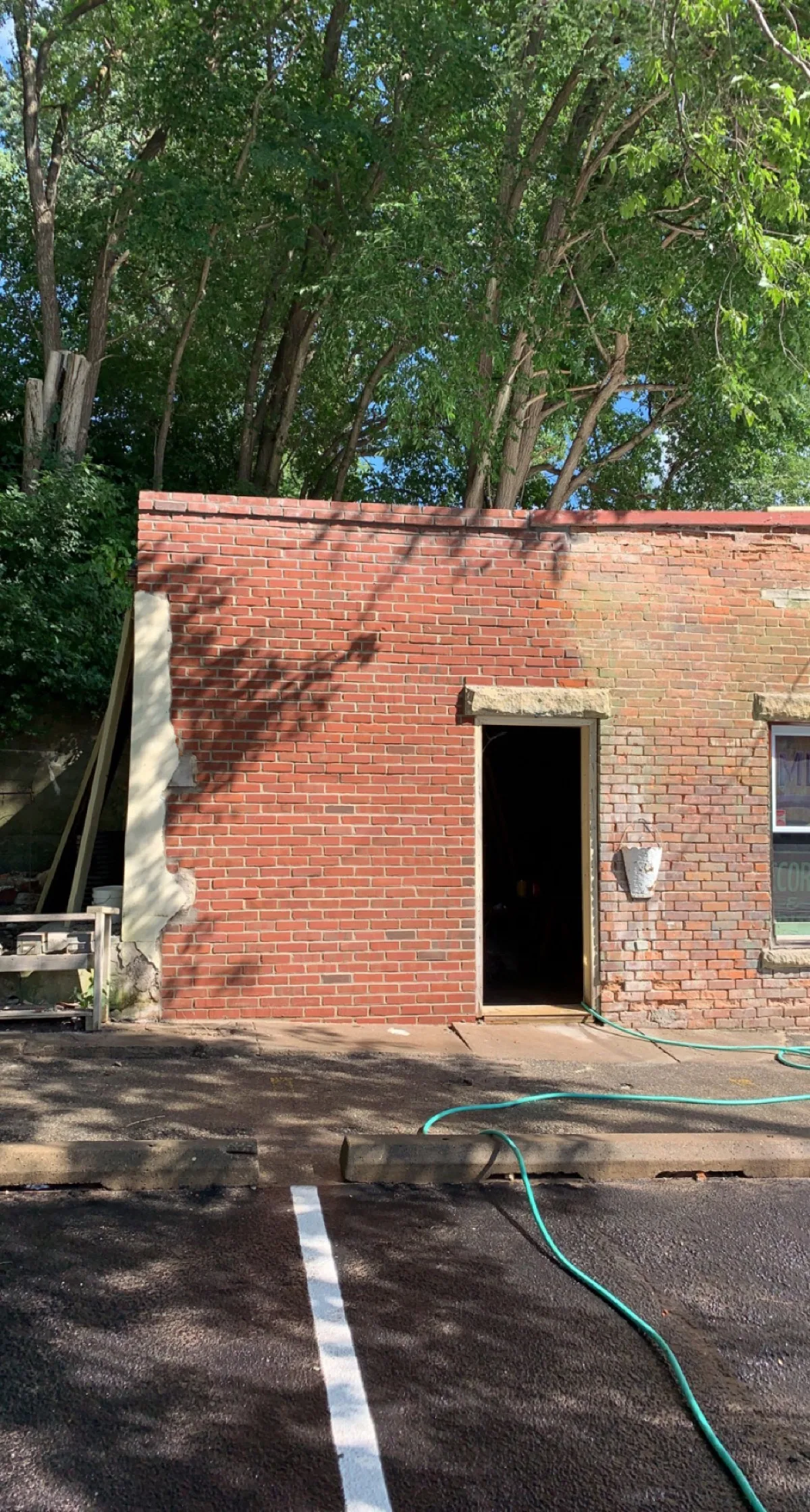
Spalled brick cut out and replaced, cracks stitched, bowed sections rebuilt, porch piers and steps restored — matched so the repair does not read as one.
Learn More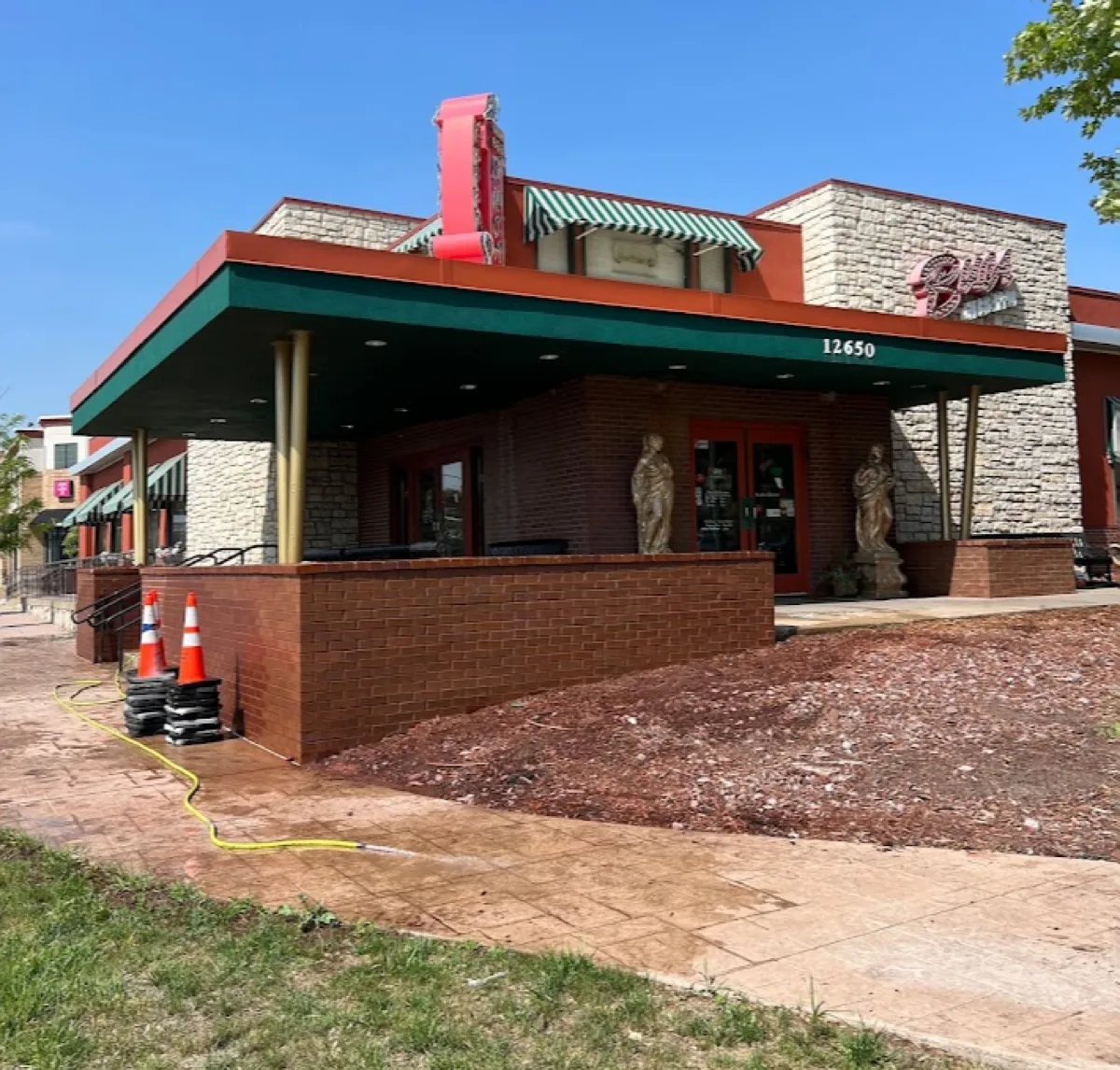
Block and stone retaining walls engineered for Minnesota frost — proper base, drainage and reinforcement — plus rebuilds of walls that have started to lean.
Learn More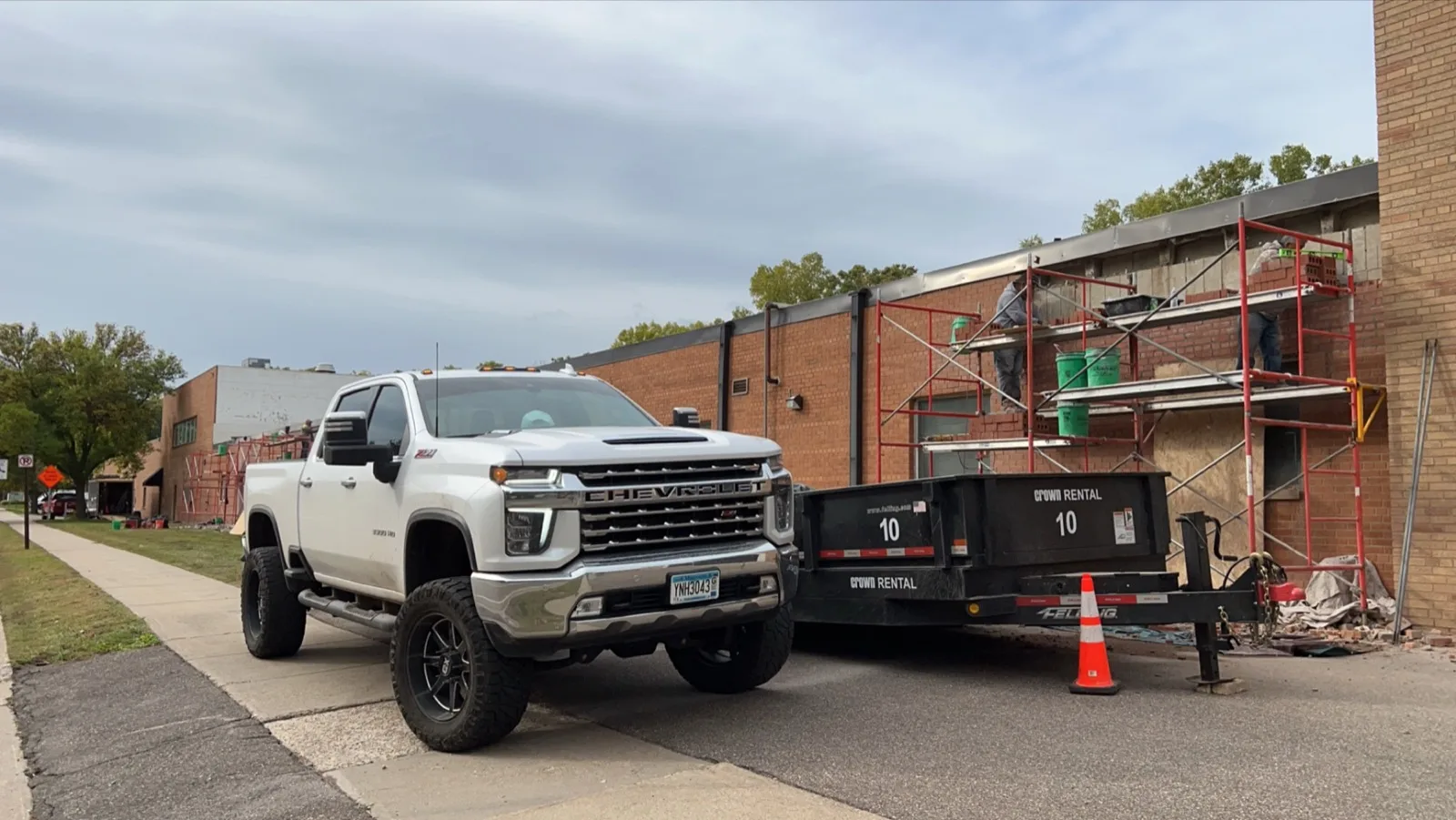
Commercial masonry restoration cost in 2026: tuckpointing per square foot, steel lintel replacement per opening, parapet repair per linear foot, brick replacement, access equipment, and what whole facades run.
Read more →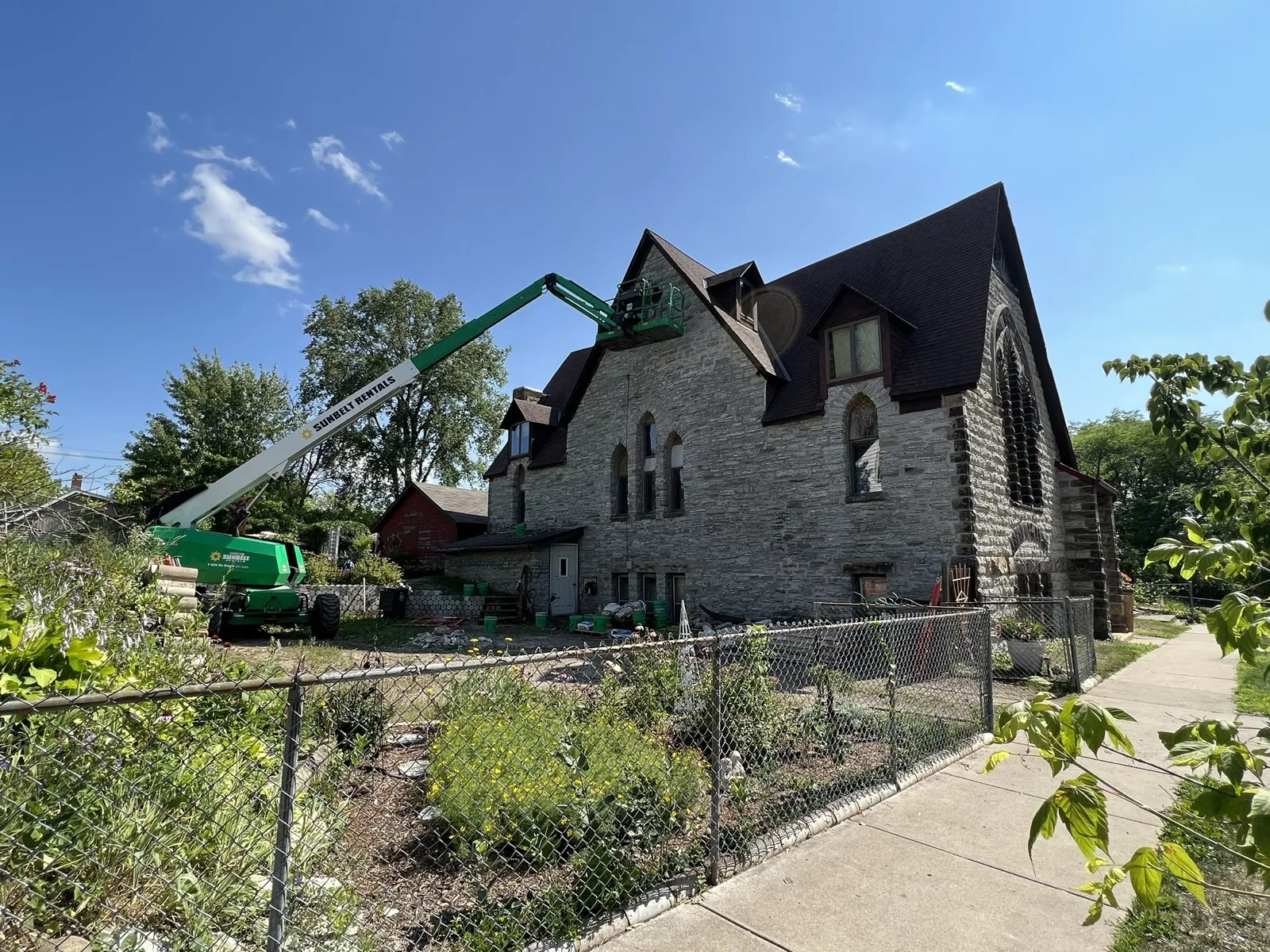
A property manager's guide to commercial masonry restoration in the Twin Cities: failure signs, what scopes cost, why parapets and lintels fail first, and how to phase the work.
Read more →What tuckpointing costs in Minneapolis and the Twin Cities: per square foot ranges, chimney and whole house numbers, what moves the price, and when to do it.
Read more →Rebuilding walls, chimneys and facades is the core of the work here. Matched brick, matched mortar, proper crowns and full joints, because that is why masonry lasts.
Freeze-thaw is the enemy of every wall in this state. Crowns that shed, joints struck to drain, air-entrained concrete, drainage behind every wall: details chosen for this climate, not a milder one.
We assess on the wall, separate must-fix from can-wait, and put price and timeline in writing. Owners and property managers can phase budgets instead of getting one take-it-or-leave-it number.
Occupied buildings, lifts and scaffolds, site protection and daily cleanup. We run residential jobs with the same discipline as a church tower, because the standard should not change with the address.
A wall that worries you, a driveway past its best, or a backyard ready to become the good part of the house? Call or send the form and we will look at the site with you and hand you a straight written quote.
Tell us about your project and we’ll get right back to you.